


Full-frame sensor : What is it and what is it used for ?
When you take a closer look at photography, you often hear people talking about full-frame sensors. This term may seem technical, almost exclusively reserved for professionals. However, it is actually at the heart of how any digital camera works.
The sensor plays an essential role. It captures light and transforms the scene into an image. Its size directly influences the quality of the photos, especially in complex conditions such as low-light photography or high-contrast scenes.
In this article, you will discover what a full-frame sensor is and why it appeals to demanding photographers. You will also learn when it is better to opt for a more compact, accessible or versatile alternative.
Full-frame sensor: definition and how it works
Before choosing a camera based on its specifications, it is important to understand what ‘full-frame’ really means. This concept relates to image quality, the light captured, and also how you intend to use your equipment.
What is a full-frame sensor?
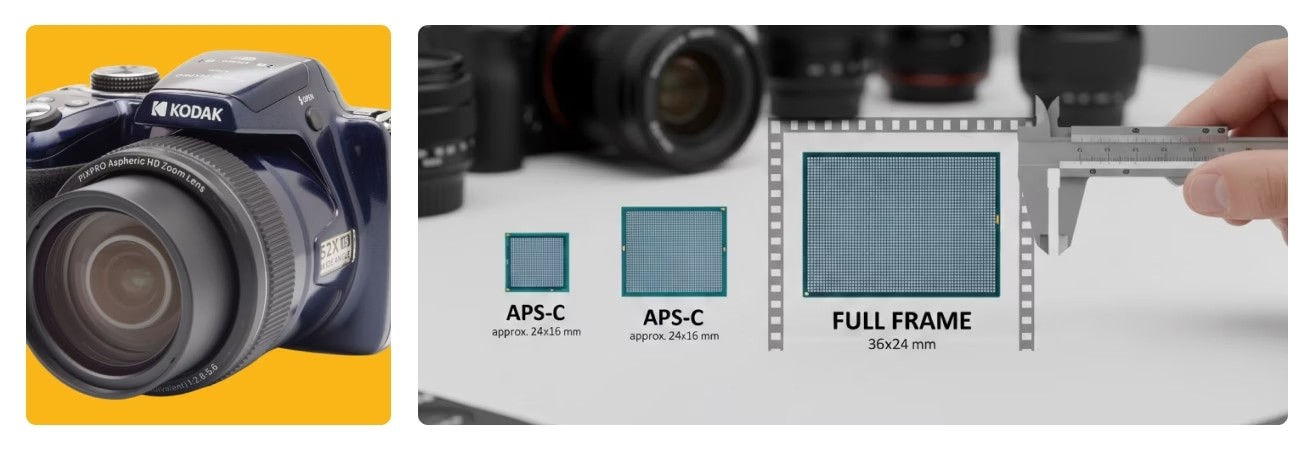
A full-frame sensor is an image sensor whose size corresponds to that of 35 mm film, i.e. 24 x 36 mm. It is referred to as ‘full-frame’ because this size is considered a historical benchmark, inherited from film cameras.
It is larger than most sensors found on entry-level or mid-range cameras. For example, APS-C sensors are smaller (approximately 22 x 15 mm), as are micro 4/3 sensors, which we will discuss next.
It is important not to confuse sensor size with resolution. A full-frame sensor can display 24, 36 or even more than 50 megapixels. But the difference also lies in the physical size of each pixel. The larger the sensor, the more light the pixels can capture.
How big is a full-frame sensor?
A full-frame sensor measures precisely 36 mm wide by 24 mm high. This surface area allows more light to be captured than on a smaller sensor, resulting in better handling of dark scenes, better contrast and beautiful depth of field.
It is this size that is the benchmark for so-called professional cameras. It can be compared to the smaller APS-C sensors or the even more compact micro 4/3 sensors. The latter are often found in cameras designed for mobility or amateur photographers.
When we talk about ‘full frame’, we are referring to a complete format, without cropping. This means that the focal length of a lens is respected. A 50 mm lens remains a 50 mm lens, unlike a smaller sensor, which will apply a conversion factor.
What is the role of the sensor in a camera?
The sensor is often compared to the film of yesteryear. It captures light through the lens and converts it into a digital signal. It records the image as it is perceived by the camera, according to the settings chosen.
The larger the surface area of the sensor, the more light it can collect and therefore produce a richer, sharper image with less digital noise. This role becomes particularly noticeable in low-light or high-contrast situations.
To fully understand how the sensor works, you also need to understand the basics of exposure. The interaction between aperture, shutter speed and ISO determines the quality of the final image. Nothing should be left to chance.
Why choose a full-frame camera?
The full-frame sensor is often highlighted for its performance. But it is still important to know in which situations it really makes a difference. It is not suitable for all profiles, but can be a real asset for certain uses.
What is the main role of a full-frame sensor?
Full-frame sensors excel at managing light. Thanks to their large surface area, they capture details in dark areas better and reduce digital noise, even when shooting in low light. This is a valuable advantage for night-time, indoor or overcast photos.
It also allows for a beautiful depth of field. This famous background blur, called bokeh, is often sought after in portrait photography. It gives a more professional touch, clearly separating the subject from its background.
Finally, images from a full-frame camera are better suited to retouching or photo enlargements without any loss of quality. For those who want to print their photos in large format, this is an important consideration.
What is a full-frame camera?
A full-frame camera is a camera body equipped with a 24 x 36 mm sensor. This type of equipment is often intended for professional photographers or the most demanding enthusiasts. Those who are looking for optimal image quality, even in complex conditions.
Kodak does not currently offer any full-frame models, but the brand does offer high-performance, affordable alternatives. Kodak bridge cameras, for example, are a good compromise for those who want to take their photography further without investing in overly expensive or complex equipment. With their powerful zoom, high-quality sensor and automatic or creative modes, these cameras are designed to support users in all their projects, from landscapes to portraits.
Which is the best sensor, 4/3 or full-frame?
It all depends on the use. The full-frame sensor is ideal for maximum image quality, artistic photography or complex shots in low light. But it is bulkier, more expensive and requires a certain level of skill.
Conversely, micro 4/3 sensors or compact formats are lighter, more affordable, and often sufficient for travel photography or everyday memories. Their compact size makes them perfect companions for travelling or spontaneous shots. This is particularly true of the compact cameras offered by Kodak.
Full frame or not: how to make the right choice?
Given the wide variety of cameras on the market, it's normal to wonder whether full frame is really necessary. Depending on your skill level, expectations, and practice, there are lighter, simpler, or more affordable options available.
What is the most common type of sensor?
The APS-C sensor is the most common format in digital cameras. It offers a good balance between image quality, compactness and price. It is used in a wide range of cameras, from entry-level to advanced amateur models.
For everyday use, an even smaller sensor is more than enough. This is the case with the Kodak C1, a compact and easy-to-use camera. It is designed for family photos, holidays and weekend outings. Its sensor is smaller than APS-C, but it does the job perfectly, capturing clear memories without any hassle.
Which lens for a full-frame camera?
Choosing a lens is never a matter of chance. It depends directly on the type of sensor. A full-frame sensor requires a lens designed to cover its large surface area. If you use a lens designed for a smaller sensor, such as an APS-C, you may end up with dark or blurry corners. This is called vignetting.
Before buying a lens, you should therefore check its compatibility. For guidance, you can consult the Kodak article on choosing the right camera lens. It explains how to read the technical specifications and choose a lens that is suitable for your camera.
Framing correctly with a full-frame sensor
Framing your photos correctly is essential in photography, and the sensor format has a direct impact on how you compose your images. A full-frame sensor offers a wider field of view than an APS-C or micro 4/3 sensor with an equivalent focal length. This means that for the same distance and the same lens, you can fit more elements into the frame.
This can be an advantage, especially in landscape or architectural photography. But it also requires more attention to composition. You need to think about the edges of the image, the balance of lines, and the background, which is more visible.
With a full-frame sensor, it is therefore important to adjust your framing when taking the shot, especially if you want to avoid cropping in post-production.
Full frame: a choice to consider based on your needs
The full-frame sensor is appealing for its image quality, light control, and beautiful depth of field. It remains an asset for professional photographers or enthusiasts looking for the best possible performance.
But it is not essential for everyone. Smaller sensors already offer excellent results for everyday use, travel or family memories. Sometimes all you need is a well-designed, easy-to-use camera to take beautiful pictures.
Before you get started, take the time to define your priorities. Type of practice, budget, desire to progress or not: every detail is important.