


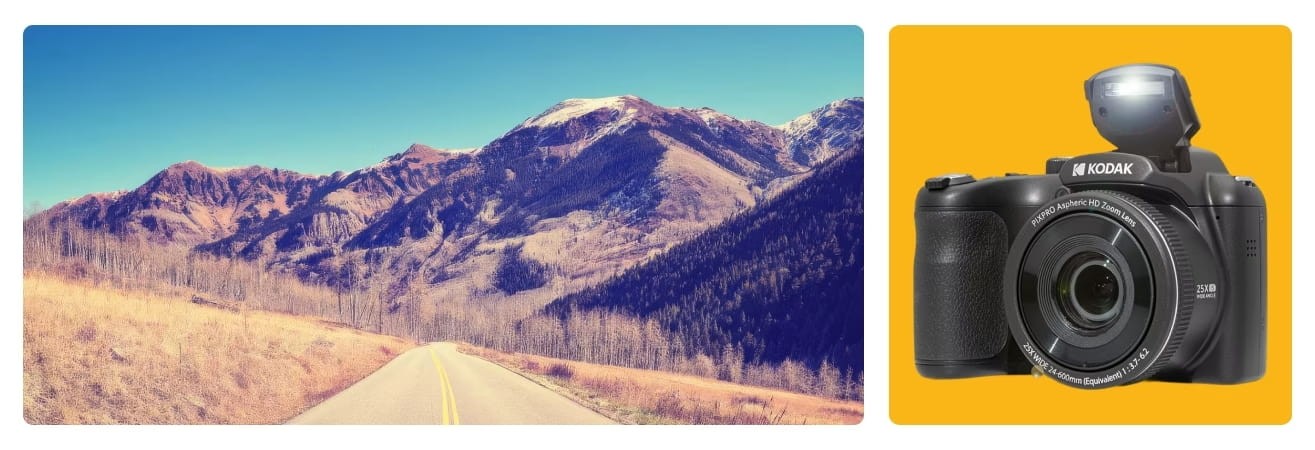
What is a reflex camera and how do you use it ?
Nowadays, as you know, photography fits in your pocket. So you might wonder why anyone would want an SLR camera. And yet these larger cameras continue to appeal to knowledgeable amateurs and photography enthusiasts. Why? Because they offer a level of control and quality that few other cameras can match.
But do you have to be an expert to use one? Not necessarily. It's more important to understand what an SLR camera offers, how it works, and when it's really useful. Let's take a simple and clear look at this, comparing SLR cameras with other types of cameras, such as compact and bridge cameras. This will help you make an informed choice, without unnecessary jargon.
What is an SLR camera?
Before you can decide whether you need an SLR, you need to understand what makes it different. Long considered the camera of expert photographers, the SLR is not just for professionals. With the right explanations, it becomes an accessible tool for those who want to take their image mastery to the next level.
How does an SLR work?
The SLR, or DSLR, gets its name from its viewfinder system. Inside, a mirror reflects light from the lens to an optical viewfinder. When you press the shutter button, this mirror lifts up, allowing light to reach the sensor, which records the photo. This mechanism allows you to frame your shot accurately through the lens.
Another strong point is that the lens is interchangeable. You can adapt your lens to your subject, whether you're photographing a wide-angle landscape or a portrait with a telephoto lens.
The advantages of an SLR camera
Unlike a compact camera or smartphone, an SLR offers almost complete control over the shot. Shutter speed, aperture, ISO sensitivity, focus—everything can be adjusted to achieve the desired effect. This level of customisation allows you to adapt to a wide variety of situations and give each image a specific intention.
The sensor, which is often larger than that of a compact camera, captures more light. This capability of the SLR improves image quality, especially in low light. It allows you to achieve a beautiful depth of field, with blurred backgrounds that highlight the subject.
The difference between SLRs and compact cameras or smartphones
The use of an SLR also differs in terms of photography. A compact camera such as the Kodak C1 Compact, for example, focuses on simplicity and full automation. It is ideal for quick, everyday use and fits in your pocket. An SLR, on the other hand, requires a different commitment. It encourages you to anticipate, choose your settings and learn.
And compared to a smartphone, it's a different philosophy. No excessive software processing, no built-in filters. Just a raw photo that you compose yourself from start to finish.
The SLR is a historical benchmark for image enthusiasts
The SLR has long been the companion of professional photographers, but also of enthusiasts. It embodies a more measured and thoughtful approach to photography, where every setting counts and every shot has meaning. Before the arrival of hybrids or expert compacts, it dominated the market for all knowledgeable amateurs.
Even today, it remains a safe bet for learning the solid basics of photography. By choosing this type of camera, you are immersing yourself in a practice that focuses on intention and image construction. More than just a tool, the SLR is a school of patience and mastery.
Why choose an SLR camera?
SLR cameras are not for everyone. But for certain types of photography or those who are keen to learn, they remain an essential reference. Provided you understand their strengths as well as their limitations. There are also lighter and more accessible alternatives, such as bridge cameras.
Learn photography differently with an SLR
Once you understand the basics of SLR photography, you enter a whole new world of photography. Every outing becomes an opportunity to experiment, observe the effects of a setting, and adjust according to the light or subject. This type of camera naturally encourages progress, as it invites you to move away from automatic mode.
Being able to choose your settings and test different frames and speeds helps you to better understand what you are photographing. It's not just a question of technique; it's a way to develop a more attentive eye and strengthen your visual sensitivity.
By exploring the possibilities of the SLR step by step, you build your reflexes as a photographer.
The various uses of the SLR for image enthusiasts
The SLR comes into its own in certain types of photography: portraiture, landscape, wildlife and sports photography. In all these situations, it allows you to freeze the moment with precision, even when there is movement or low light.
It is the ideal tool for those who want to tell a visual story with a professional finish. It is also highly appreciated for large format prints. Indeed, the quality of the files obtained is often superior to that of a compact camera or smartphone.
Let's imagine, for example, a trip to the mountains. The photographer can capture a bird in flight thanks to a fast shutter speed, then immortalise a panorama of a sunny valley with subtle details in the sky and the relief.
The limitations of SLR cameras to be aware of before investing
Before taking the plunge, it's best to keep a few points in mind. SLR cameras are bulkier, heavier and take a little time to master. They can also be quite expensive, especially if you want to buy multiple lenses.
That's why they're not for everyone. If you're looking for a more versatile, simpler camera that's similar in use, there are some excellent compromises available.
The affordable alternative to an SLR: the Kodak PixPro AZ528 bridge camera
The Kodak PixPro AZ528, for example, offers an approach very similar to an SLR... without the constraints. Its 52x optical zoom, good responsiveness and monobloc format make it a complete camera, suitable for distant subjects such as birds, animals or amateur sports.
There's no need to change lenses, as everything is built in. It's the perfect solution for enthusiasts who want to go beyond automatic mode without getting bogged down in a complex system.
It combines performance and accessibility in a body designed for the field. It's an excellent gateway to more technical photography without sacrificing simplicity.
How to use an SLR camera properly?
Getting started with an SLR means stepping out of automatic mode to better understand how an image is constructed. You don't need to be an expert to get started. The key is to take the time to learn the right techniques and choose your equipment carefully.
Understanding the basics: ISO, aperture and shutter speed
Photography is all about light. There are three main settings that allow you to control it:
-
ISO, which adjusts the sensitivity of the sensor. The higher it is, the more light the camera captures, but with a risk of digital noise.
-
Aperture, expressed in f-stops, controls the depth of field. A large aperture (e.g. f/2.8) gives a nice blurred background.
-
Shutter speed determines whether the subject is frozen or blurred. A fast speed freezes the action, while a slower speed captures movement.
These settings may seem complex at first, but they quickly become second nature with a little practice.
For budding photographers who want to learn more about this topic, check out our article: Understanding aperture, shutter speed and ISO: the magic trio for successful photography
Use the right modes on your DSLR to improve without getting discouraged
Manual mode gives you complete control. But it's not essential for beginners. Most SLR cameras also offer semi-automatic modes:
-
Aperture priority mode (Av or A), ideal for managing depth of field.
-
Shutter priority mode (Tv or S), perfect for moving scenes.
These options help you progress smoothly while observing the impact of each choice.
Think about your equipment so you can stay calm in the field with your SLR
When you start accumulating high-definition shots, memory becomes an issue. A high-performance, reliable card is therefore essential. The Kodak Ultra Performance 128 GB micro SD card allows you to store hundreds of photos without slowing down, even in burst mode.
It's a discreet but essential accessory to avoid unpleasant surprises during a shoot. Also remember to slip a spare battery into your bag and protect your camera body with a suitable cover, especially if you're shooting outdoors.
DSLR or bridge camera? How to make the right choice for your level
With such a wide variety of cameras available, it can sometimes be difficult to know which one to choose. DSLR or bridge camera? Neither is better than the other; it all depends on how you plan to use it, your budget, and your skill level. Here are a few pointers to help you decide.
SLR: a demanding choice for photography enthusiasts
SLR cameras are designed for those who want total control over their images. They are primarily aimed at enthusiasts, content creators, or those looking to improve their skills.
With a precise optical viewfinder, interchangeable lenses and excellent image quality, SLRs allow you to work in depth. They are particularly popular for portrait, landscape and sports photography. But they require a certain commitment: learning manual settings, more cumbersome equipment and a higher budget.
They are not always the most suitable camera for beginners or for simple everyday use.
The bridge camera: a truly versatile and accessible alternative
The bridge camera looks like an SLR, without the technical complexity. It does not allow you to change lenses, but generally offers a powerful zoom, high-performance automatic settings and intuitive handling.
It is a choice that appeals to both budding photographers and parents who want to capture everyday moments. It is ideal for travellers who prefer to limit their equipment, but also for those who want to develop their photography skills without getting lost in overly complicated settings.
Bridge cameras go further than smartphones, while remaining easy to use. They offer great image quality, while retaining the practicality of an all-in-one device.
Kodak PixPro AZ405: powerful zoom and all-in-one simplicity
In the bridge camera range, the Kodak PixPro AZ405 is a particularly well-balanced model. With its 40x optical zoom, it allows you to capture distant subjects without any loss of quality. Perfect for nature scenes, candid portraits or even sports photos from a distance.
Its price makes it accessible, while offering plenty of room for improvement. It will appeal to those who want a complete camera without getting lost in settings or managing multiple lenses. It stands out as a serious alternative for those who want the power of an SLR without the complexity.
SLR or bridge camera: making the right choice for your needs
Choosing an SLR camera means committing to mastery and image quality. But this choice also means investing in learning the technique and managing heavier and often more expensive equipment.
The bridge camera, on the other hand, offers an excellent compromise. It allows you to explore different shooting situations without getting lost in the settings. For many, it is a reliable, simple and powerful ally that allows you to progress at your own pace.
In photography, the best camera is often the one you enjoy using. Taking into account your level, your desires, your budget and the opportunities you have to go out and shoot is often the best starting point.