


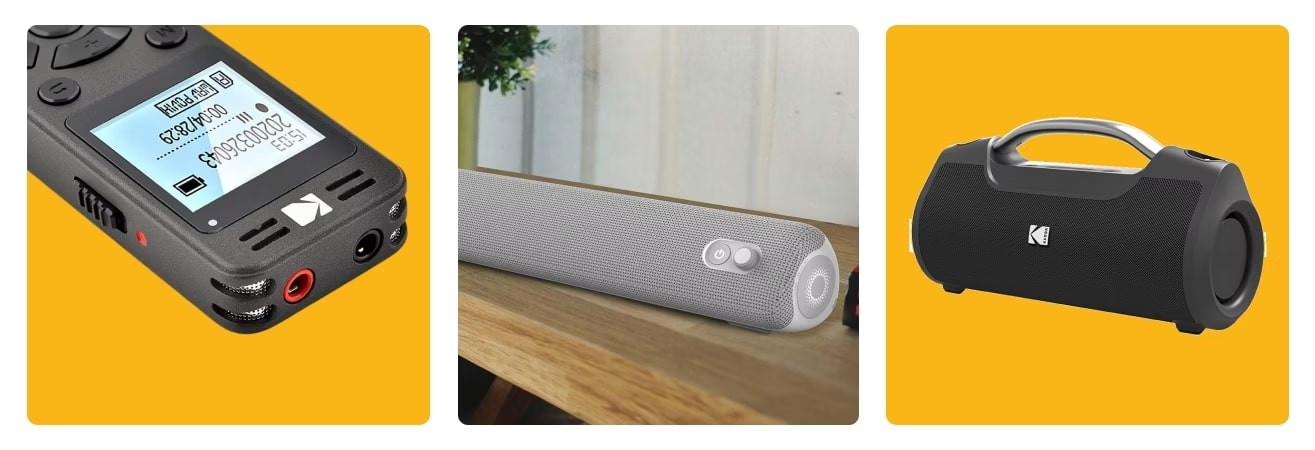
What equipment should you choose for audio recording ?
Recording sound, voice or ambience has never been easier. Whether for professional or personal use, audio recording is now part of everyday life. Distance learning courses, meetings, interviews, voice memos or simple memories.
But getting clear, usable sound isn't that simple. Choosing the right equipment is essential. It depends on what you want to record, but also on the environment, the playback format and the desired listening comfort.
In this article, we take a look at the different types of equipment useful for audio recording, helping you to identify the solutions best suited to your needs.
Getting the right equipment for audio recording
Before choosing the right device, it's important to understand what you want to record. In what environment and with what level of precision. A good audio recording depends as much on the equipment as on the clarity of your objective.
There are many different situations. A student who wants to listen to a lecture again, a journalist conducting an interview, a professional archiving their meetings, or even a podcast enthusiast trying their hand at their first recordings. In all cases, it is essential to match the right tools to the right situation.
What equipment do I need for voice recording?
It all depends on what you want to capture, but one thing is certain: there is no point in over-equipping yourself for a simple task. For voice notes, a conference or an interview, a compact dictaphone is more than enough. It has the advantage of being self-contained, easy to carry and designed for clear listening, even in less than ideal environments.
A voice recorder avoids the interruptions and interference often associated with using a smartphone. Some models offer a large memory capacity. With the ability to record for several hours, you can even choose the recording quality (MP3, WAV, LPCM, etc.).
A model such as the Kodak VRC250 Dictaphone, with its 8 gigabytes of storage, is particularly well suited to these everyday uses. Lightweight and intuitive, it is ideal for both students and mobile professionals.
How to make a good audio recording?
The quality of a recording depends first and foremost on the environment in which it is made. A room that is too noisy, too empty or, conversely, too reverberant can impair intelligibility. It is therefore important to choose a quiet place without echoes and to control any background noise (open windows, fans, computer keyboards, etc.).
Next, the distance between the microphone and the sound source plays a crucial role. If you are too far away, the volume will be low and ambient noise will take over. If you are too close, you risk saturation. A distance of about 20 to 30 cm is a good compromise in most situations.
The recording format is also important. MP3 is lightweight and sufficient for simple listening, while WAV, which is heavier, offers superior quality. The latest models often allow you to choose between several formats depending on your needs.
Finally, let's not forget the difference between built-in microphones and external microphones. The former are practical and discreet, but more sensitive to handling noise. The latter, often adjustable or equipped with a wind filter, are recommended for more demanding sound recordings.
Recording audio with a dictaphone
For those looking for mobility, the dictaphone remains a reliable and powerful tool. Compact, autonomous and increasingly accurate, it is suitable for many professional or personal uses.
Whether you are a student, journalist or project manager, it allows you to keep an accurate record of exchanges. But they also allow you to capture ideas on the fly or prepare audio content without relying on a computer or smartphone.
What is the best device for recording?
When comparing the options available for recording audio, dictaphones stand out for their simplicity and reliability. Unlike smartphones, they are not subject to notifications, calls or fluctuating battery life. It is designed to record, and only for that purpose.
There are two main categories. Analogue dictaphones, which are now rarer, and digital models, which dominate the market. The former use cassettes and are mainly kept for archival purposes. The latter, which are more modern, offer better sound quality. Of course, they also have extended storage capacity and direct compatibility with computers.
Among digital dictaphones, some stand out for their ease of use. The Kodak VRC350, for example, offers an automatic ambient noise reduction feature. This allows you to record in public places, corridors or shared spaces, while maintaining a clear and audible voice. Its long battery life makes it an excellent companion for busy days. This is particularly useful when you need to record several sessions without interruption.
How to choose a voice recorder?
The right dictaphone is one that suits your daily life. If you are a student, you will need a device that is discreet, lightweight and easy to use. A model that fits in your pocket and can be started in a few seconds, as soon as the teacher begins to speak.
For a journalist, the priorities are different. Battery life, sound quality and the ability to organise files by project become key. You need to be able to easily find a recording, add a date or reference, or even protect certain files if necessary.
In the professional world, especially during meetings or interviews, there are additional features that can make all the difference. These include scheduled recording, time stamping (or audio watermarking), and quick connection to a PC.
The Kodak VRC450 perfectly meets these requirements. It combines an intuitive interface, excellent audio reproduction and advanced features designed for intensive use. It is also appreciated for its compatibility with most file management systems, which simplifies the organisation of recordings on a computer.
What is the best audio recording tool?
At the higher end of the range, some dictaphones are similar to semi-professional solutions. They offer advanced features that allow fine control over sound recording, while remaining easy to use.
Intelligent voice filtering, for example, reduces background noise while highlighting the voice. Some models also feature an OLED screen, which is easier to read outdoors or in a dark room, and a memory capacity that allows for long recordings without having to constantly transfer files.
The Kodak VRC550 Dictaphone is a good example of this. It is designed for those who need reliable equipment to record training sessions, podcasts or long recordings. Its features are impressive. With 20 hours of battery life and 16 gigabytes of internal memory (up to 32 with a memory card), you'll have plenty of time to get the job done. Its navigation is smooth and its precise settings make it a very comprehensive tool, whether you're in the studio or on the go.
Listen to your recordings with portable speakers
Sound quality during playback is just as important as during recording. Clear sound makes it easier to understand, increases efficiency and sometimes even allows you to pick up on details that you might otherwise have missed.
How can you hear a recording better?
To hear a recording properly, several criteria must be taken into account. Sound power is one of the first things to look at. It ensures that listening remains comfortable, even in a noisy environment or in a large room. Next comes sound clarity, which is essential for reproducing voices clearly, without saturation or distortion.
Battery life is another important factor. A portable speaker should be able to operate for several hours without recharging, especially if it is used for long work sessions or when travelling. Finally, Bluetooth connectivity is now standard. It eliminates the need for cables, simplifies setup and allows recordings to be played directly from a compatible dictaphone or computer.
The Kodak Soundbrix mini Bluetooth speaker effectively meets this need. Compact, easy to carry and surprisingly powerful for its size, it allows you to listen to audio files in good conditions, whether in a classroom, at home or on a business trip.
Play your audio recordings anywhere
Listening to your recordings should not be limited to an office or a closed room. It is entirely possible to enjoy good sound in the great outdoors, in the city or even by the water. The key is to have a speaker that is suited to these conditions.
The Kodak PWS-2225Y, a portable and durable Bluetooth speaker, lets you listen to your audio files wherever you want. It fits easily into a backpack, thanks to its featherweight design weighing less than 400 grams. Whether you're in a park, at the beach or revising in the sun, it remains stable, reliable and easy to use.
Its generous battery life lasts for several hours without recharging, and its splash-proof design means you can use it outdoors without worry. It's a great way to review a lecture, listen to an interview again or share a recording, even when you're far from a power outlet.
What is the best inexpensive portable speaker?
As you can see, a good recording deserves good playback. To clearly listen back to what you have recorded with a dictaphone, it is best to use an external speaker. This provides clearer, fuller sound and, above all, allows you to concentrate better on the content. Our aim is to offer you effective, inexpensive speakers that can meet this need.
Among the affordable and easy-to-use models, two Kodak products stand out. The Kodak PWS2284 Bluetooth speaker, with its featherweight design and Bluetooth connectivity, is perfect for quick listening at home or on the go. Colourful and easy to use, it is equally suited to study sessions and moments of relaxation. It is a model that is truly accessible to all.
The Kodak PWS-2257 is much more powerful and offers enhanced sound quality. It is also larger and heavier. Nevertheless, it is well suited for everyday use in the office or at home, or even for turning up the volume at your parties.
In both cases, these speakers can be used for much more than just recordings. They work just as well for listening to music or podcasts. Having a dictaphone to capture sound and a speaker to listen to it properly remains a simple and effective combination.
Choosing the right equipment for audio recording and listening
Audio recording has become second nature in many everyday situations. Whether you want to capture a voice, keep a record, or broadcast a message, it is important to use the right equipment.
From simple dictaphones to advanced models, as well as portable speakers for clear and comfortable listening, each piece of equipment has its place depending on your needs. The key is to find the right balance between simplicity, performance and mobility.
Kodak offers a complete range of products designed to facilitate sound recording and playback, whether you are a student, professional or passionate amateur.